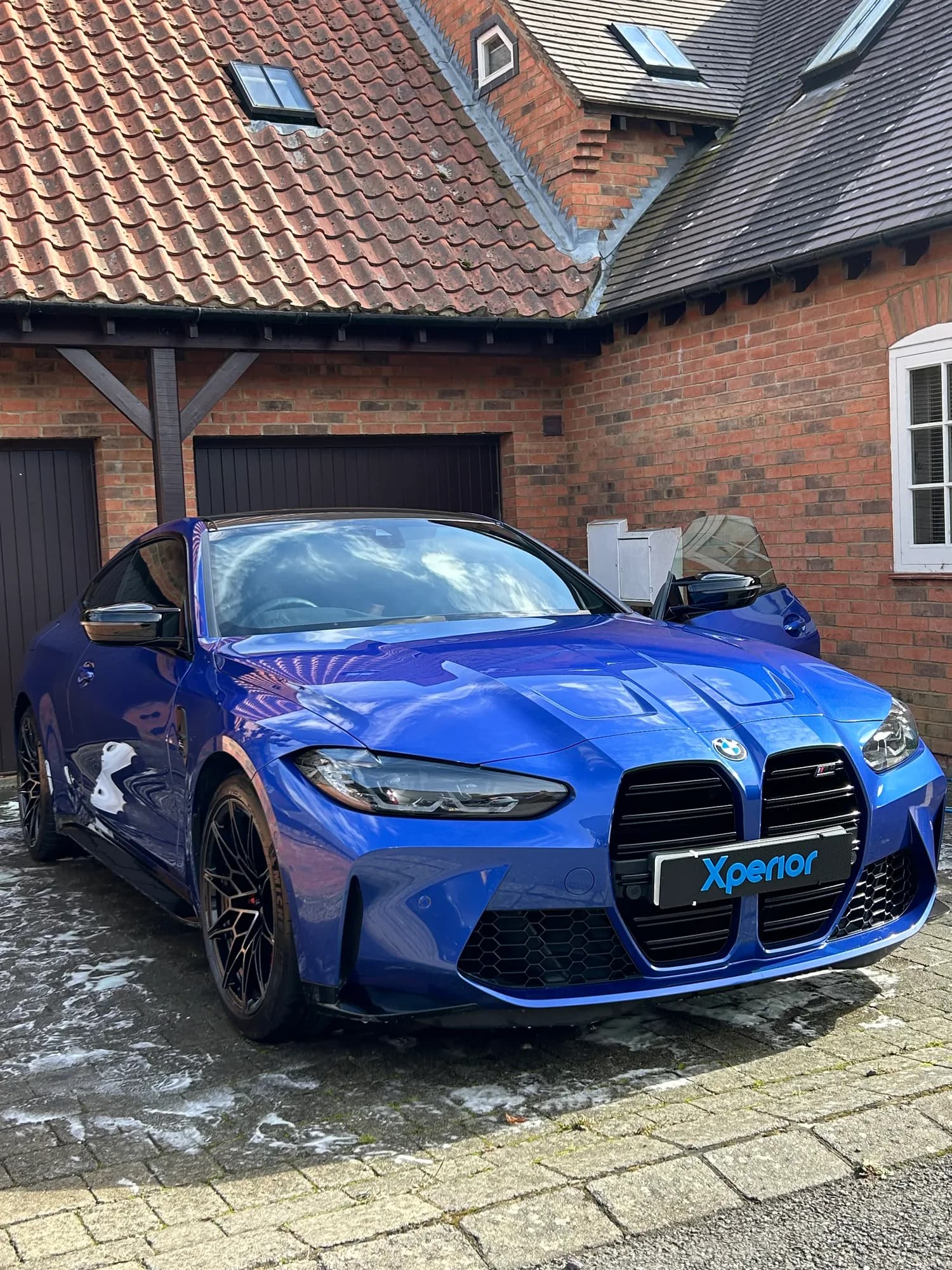
Ceramic coatings get sold with a lot of noise attached — self-cleaning paint, scratch-proof finishes, nine-year guarantees. Some of that is true, some is stretched, and some is nonsense.
Here's what a coating actually does, where the value genuinely is, and when we'd tell you to save your money.
What a coating is
A liquid polymer that bonds chemically to your clear coat and cures into a hard, transparent layer roughly 2–3 microns thick. Unlike wax, which sits on the surface and washes off over weeks, a coating is bonded and measured in years.
It's a sacrificial layer. Whatever hits your car — road salt, bird lime, tree sap, the friction of washing — lands on the coating rather than on your paint.
What it genuinely does
- Chemical resistance. Bird mess and tree sap are acidic and etch into clear coat, sometimes within hours in summer. On a coated car they sit on top and wipe off. This alone justifies it for a lot of people.
- Much easier washing. Dirt has far less to grip. Most of a coated car cleans with a rinse and a gentle pass, which means less contact, which means fewer new scratches.
- Real gloss. A coating adds visible depth and sharpness of reflection, on top of whatever correction was done underneath.
- Water behaviour. Water beads tightly and sheets off, taking dirt with it and cutting down water spotting.
- Winter. Road salt doesn't bond to a coated surface the way it does to bare clear coat.
What it doesn't do
This is where the marketing outruns reality.
- It won't stop scratches. A coating is hard, but it's microns thick. It resists very light marring. It will not stop a stone chip, a key, a trolley, or a brush in an automatic wash. Anything claiming scratch-proof is lying — that's what paint protection film is for.
- It isn't self-cleaning. The car still needs washing. It just needs washing less carefully and less often.
- It won't hide swirls. A coating is transparent. Apply it over damaged paint and you've sealed in swirl marks under a hard layer for two years. This is why correction comes first.
- It doesn't last nine years. Not in real conditions on a daily-driven car in a British winter.
On the long guarantees
Multi-year warranties usually require annual paid inspections and specific maintenance, and they cover total product failure — not the gradual loss of performance you'll actually experience. Read what the guarantee obliges you to do before you value it.
How long it really lasts
A quality coating, professionally applied and reasonably maintained, gives you two to three years of genuine performance on a daily driver. A garaged weekend car goes longer. A car parked outside under trees and washed at the supermarket goes shorter.
The decline is gradual: the beading gets lazier, the car holds dirt a bit more. There's no cliff edge where it stops working.
The money
The coating itself is a small part of the cost. Most of what you pay for is the correction underneath — the day or two of machine polishing that has to happen before anything is sealed in. That's why coating quotes vary so much: they're really quotes for different amounts of correction.
Set against that: the paint condition of a three-year-old car is one of the first things a buyer or a trade-in appraiser reacts to. On a car worth £70,000, the difference between well-kept and visibly swirled paint is usually a multiple of what the coating cost. On a £12,000 car it often isn't.
When it's worth it
- You're keeping the car three years or more
- It's new or nearly new, and the paint is still in good shape
- It lives outside, or under trees, or does winter miles
- You care how it looks, and you'd rather spend less time washing it
- It's a car where condition drives a meaningful part of the value
When it isn't
We'd rather tell you this up front than take the booking:
- You're selling within a year and you're looking at a multi-year system. Choose a one-year coating instead. It gives you the gloss and easy cleaning for the time you have the car, without paying for years of protection the next owner gets.
- The paint is already badly damaged and you don't want to correct it. Coating over heavy swirling locks the damage in. Either correct first, or don't coat.
- You go through automatic washes. The brushes will out-damage what the coating protects against, and you'll have paid for protection you're actively undoing.
- The car's a workhorse and you genuinely don't care how it looks. Nothing wrong with that. A coating is a luxury, not maintenance.
The honest summary
A ceramic coating is very good at what it actually does: making the car much easier to keep clean, protecting the paint from chemical damage, and holding a corrected finish for years rather than months. It's not armour and it's not magic.
If you want the car to look as good in three years as it does now, and you'd rather not spend every other Sunday washing it carefully, it's worth the money. If you're chasing scratch immunity, you want film, not coating.
Tell us the car and how it's used and we'll tell you which of those you need — including when the answer is neither. More on what's involved on the detailing page.
Want a straight answer on your car?
Tell us what you've got and send a photo in daylight. You'll get pricing back the same day, and an honest view of what it actually needs.
Or call 07787 927204 — Mon–Sat, 8am–6pm