Protection
Ceramic coating vs PPF: which one does your car actually need?
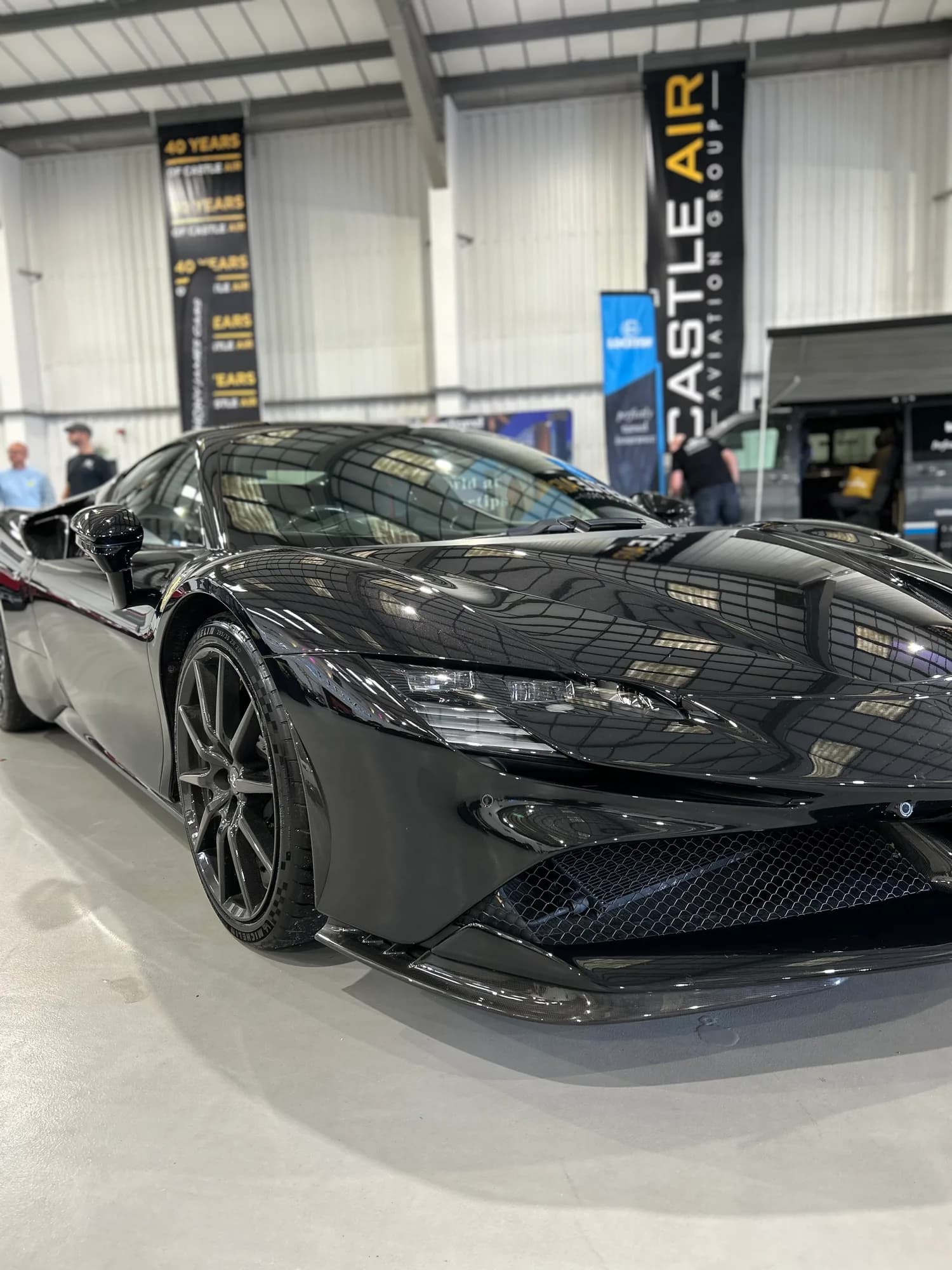
PPF (paint protection film) is a thick, clear film that physically stops stone chips and scratches. A ceramic coating is a thin, hard layer that protects against chemicals, water spots and UV, and makes the car much easier to keep clean — but it won't stop a stone chip. They do different jobs, which is why the honest answer to "which one?" is often "it depends where on the car", and sometimes "both".
The difference in one line each
- PPF is armour. It takes the impact so your paint doesn't.
- A ceramic coating is a raincoat. It stops things sticking and soaking in, and keeps the finish glossy and easy to clean.
Most of the confusion comes from marketing. Coatings are often sold as "scratch-resistant" or even "scratch-proof", which makes them sound like they overlap with film. They don't, really. A coating is a couple of microns thick. Film is many times thicker than that, and it's the thickness that absorbs an impact.
What PPF actually is
Paint protection film is a clear thermoplastic urethane film, fitted over the paint panel by panel. Good modern film has a self-healing top layer: light scratches and wash marks in the film close back up with heat from the sun or warm water.
What it's good at:
- Stone chips — the main reason anyone fits it. Grit and stones thrown up at motorway speed mark the film instead of chipping the paint.
- Light scratches and scuffs — door edges, the top of the rear bumper where bags get dragged, the lower doors on lane cars.
- Keeping original paint original — film comes off cleanly from factory paint in good condition, leaving the paint underneath as it was the day it was covered.
What it's not:
- Invisible everywhere. From normal distance you won't see it, but up close you may spot an edge where the film can't wrap around a panel.
- A cleaning aid on its own. Bare film collects dirt much like paint does, which is why it's often coated on top.
- A fix for existing damage. Chips and swirls under the film stay visible through it. The paint is corrected before film goes on.
What a ceramic coating actually is
A ceramic coating is a liquid that bonds chemically to the clear coat and cures into a hard, slick, transparent layer. Unlike wax, it doesn't wash off in weeks — a quality coating lasts years. More detail in our honest look at whether a coating is worth it.
What it's good at:
- Chemical protection — bird lime, tree sap, bug splatter and road salt sit on the coating instead of etching into the clear coat.
- Water spots — water beads and runs off before it can dry where it lands, which matters a lot in hard-water areas.
- Easy cleaning — dirt struggles to stick, so washing takes less contact, which means fewer new swirl marks.
- Gloss — a coating adds visible depth and sharpness to the finish.
What it's not: protection against stone chips, keys, trolleys or a brush car wash. If someone tells you a coating will stop chips, they're selling, not explaining.
Side by side
- Stone chips: PPF yes. Coating no.
- Light scratches and wash marring: PPF yes, and it self-heals. Coating resists the very lightest marring only.
- Bird lime, sap and bugs: both protect, a coating slightly better because it's slicker.
- Water spots and easy washing: coating clearly better. Film can be coated to get the same benefit.
- Gloss: coating adds it. Quality gloss film is clear and doesn't take away from it; matte film turns gloss paint satin.
- Thickness: coating around 2–3 microns. Film well over a hundred.
- Lifespan: coatings typically two to three years of real performance on a daily driver, longer on a garaged car. Quality film typically five to ten years.
- Coverage: a coating usually goes over the whole car. Film usually goes where the damage happens — the front end — though full-car film is an option.
- Cost: film costs more per panel, because it's precision work fitted by hand. That's a big part of why most people choose film on the front and a coating elsewhere.
So which do you need?
Mostly town driving, short trips
A ceramic coating on its own is usually the better spend. Without regular motorway miles, chips are less of a worry, and the everyday threats — bird lime, tree sap, grime, water spots — are exactly what a coating handles.
Regular motorway or A-road miles
This is where film on the front end earns its money. Following lorries on the M1, A1(M), A14 or A43 means a constant spray of stones at the bumper, bonnet, mirrors and headlights. A coating does nothing for that. Most people in this position choose a front-end film package and a coating over the rest of the car.
New, leased or high-value car
Both, usually. Film on the front end keeps the original paint chip-free — which matters at lease return and at resale — and a coating over everything, film included, keeps the whole car easy to clean. The best time is in the first few weeks, before the first long run. Our new car checklist covers the rest.
Country lanes and gravel
Hedge scratches along the sides and gravel thrown at the lower doors are physical damage, so film on the exposed panels is the real protection. A coating on the rest makes lane mud far easier to rinse off.
Selling within a year
Neither, honestly. A deep clean and a light gloss enhancement will get you most of the visual benefit for much less, and the next owner gets the protection you paid for.
Can you have both?
Yes, and it's the most common setup on cars we protect. The order matters:
- 1Decontaminate and correct the paint. Both film and coating are transparent and long-lasting, so anything left on the paint gets sealed in underneath. See what swirl marks are and how they're removed.
- 2Fit the film to the areas that take the impacts.
- 3Coat the whole car, film included. A coating made for film keeps it slick and easy to clean, so the filmed panels behave like the rest of the car.
Coating the film
Bare film holds onto dirt and can stain over time, particularly lighter-coloured cars. A coating on top prevents that and makes it as easy to wash as the coated paint around it.
Common questions
Is PPF better than ceramic coating?
Neither is better — they protect against different things. Film is better against physical damage. A coating is better for easy cleaning, water spots and gloss. Which matters more depends on how and where you drive.
Can you put a ceramic coating over PPF?
Yes, and it's recommended. It's how most filmed cars end up being finished.
Does PPF go yellow?
Older films did. Quality modern film is UV-stable and carries a manufacturer warranty against yellowing, cracking and lifting. Cheap film is where those problems still show up.
Do I need PPF if I have a ceramic coating?
Only if stone chips are a concern — and on a car doing regular motorway miles, they usually are. The coating won't stop them.
Can PPF go on matte paint?
Yes, with matte film that keeps the satin finish. Matte paint can't be polished if it's marked, so protecting it matters even more than on gloss.
The short version
Film stops chips. A coating stops things sticking. If you do motorway miles or care about keeping original paint, you probably want film on the front. If you want the car easier to keep clean and protected from what lands on it, you want a coating. Plenty of cars benefit from both.
We fit both, at your home, across the East Midlands — see paint protection film and ceramic coatings, or the local pages for PPF in Peterborough, Leicester, Northampton, Corby, Market Harborough and Rutland. Not sure which your car needs? Tell us the car and how you use it, and we'll tell you honestly — including when the answer is neither.
Want a straight answer on your car?
Tell us what you've got and send a photo in daylight. You'll get pricing back the same day, and an honest view of what it actually needs.
Or call 07787 927204 — Mon–Sat, 8am–6pm