Detailing
Acidic vs pH-neutral vs alkaline car cleaners: a detailer's guide
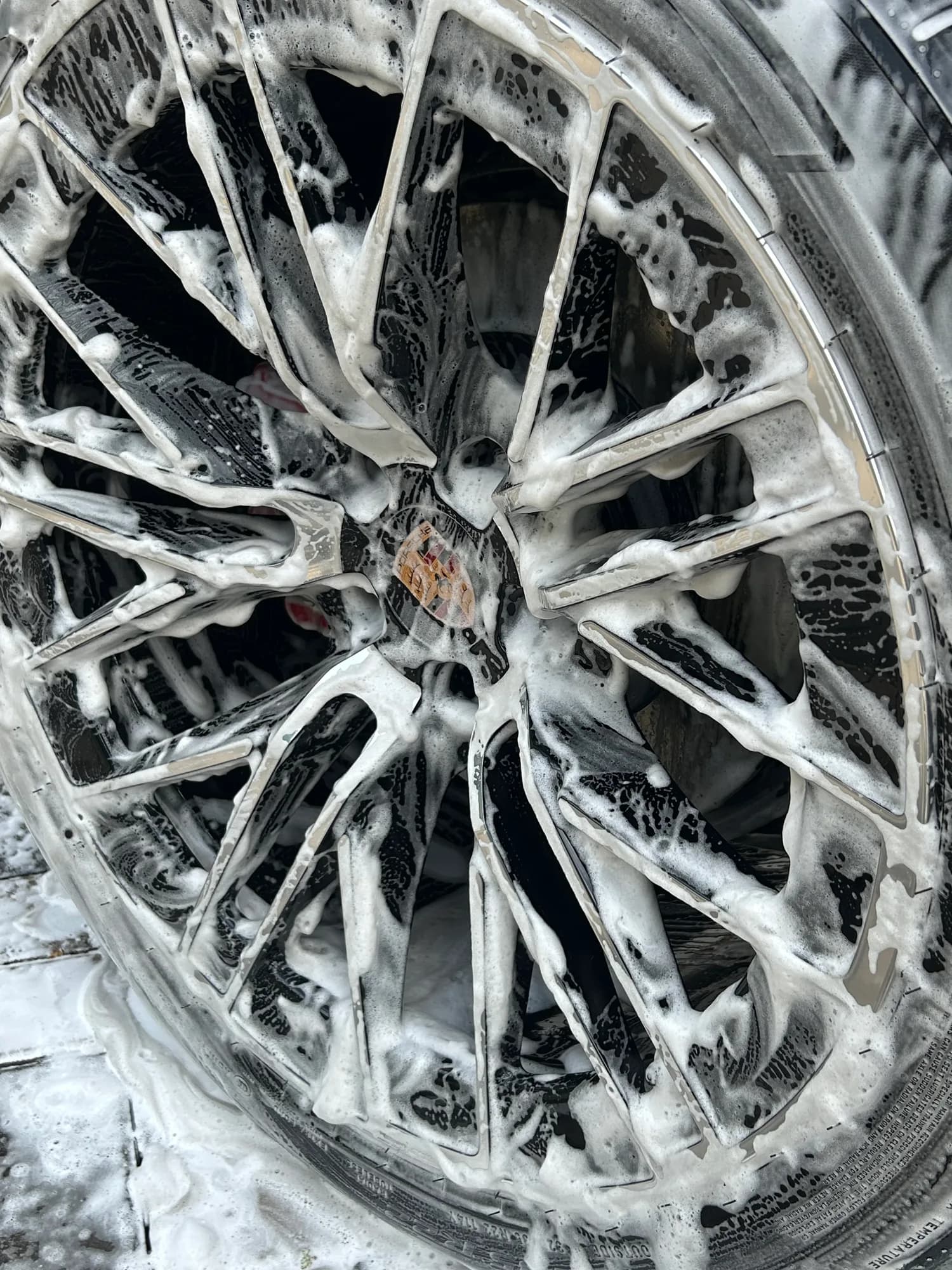
Alkaline cleaners break down oily, organic dirt. Acidic cleaners dissolve mineral deposits. pH-neutral cleaners are for safe, regular washing that won't strip your protection. That's the whole idea in one line — the rest is knowing which dirt you're dealing with, and what each type can damage if it's used wrongly.
What pH actually means
pH is a scale from 0 to 14 that measures how acidic or alkaline a water-based solution is. 7 is neutral — pure water. Below 7 is acidic, above 7 is alkaline. The scale is logarithmic, so pH 4 is ten times more acidic than pH 5, and a hundred times more than pH 6. Small number changes are big chemical differences.
The reason it matters for cars is simple: different kinds of dirt dissolve at different ends of the scale. Using the right chemistry means the cleaner does the work, so you need far less scrubbing — and scrubbing is what causes swirl marks.
Alkaline cleaners (above pH 7)
Alkaline products are the workhorses for organic and oily grime: traffic film, road grease, dead insects, bird mess residue, and general grime on lower panels. Alkalinity breaks fats and oils down so they can be rinsed away.
You'll find them in:
- Snow foam and pre-wash — loosening grime before anything touches the paint
- Traffic film removers (TFR) — stronger, for heavy road film
- All-purpose cleaners and degreasers — engine bays, arches, tyres, interior plastics at the right dilution
- Tyre and arch cleaners
Where alkaline goes wrong
Strong alkalines strip waxes and sealants, so a heavy TFR before every wash will undo your protection. Left to dry on hot panels they can stain paint and trim. And they can mark bare or uncoated aluminium. Always dilute correctly, work in the shade, never let it dry, and rinse thoroughly.
Acidic cleaners (below pH 7)
Acidic products are for mineral and inorganic deposits — the things alkalines can't touch:
- Water spots — the calcium and magnesium rings left when hard water dries on paint or glass
- Limescale and mineral build-up on glass, trim and coatings
- Heavy brake dust and road deposits on wheels, using an acidic wheel cleaner
- Coating maintenance — some ceramic coatings are periodically washed with a mild acidic shampoo to clear mineral build-up that dulls the water beading
Where acidic goes wrong
Acidic wheel cleaners can permanently mark polished, anodised, chrome and some diamond-cut wheels. Strong acids left on paint or glass can etch them. The strongest professional acids need gloves and eye protection. If you don't know what a wheel is made of or how it's finished, don't use an acidic cleaner on it.
Worth knowing: most modern iron fallout removers — the ones that turn purple and "bleed" on contact with brake dust — aren't acidic at all. They're usually close to pH-neutral and work through a different chemical reaction, which is why they're safe on most wheels and paint.
pH-neutral cleaners (around pH 7)
pH-neutral shampoo is what you should be washing your car with most of the time. It cleans effectively by lubricating and lifting dirt, but it won't strip wax, sealant or a ceramic coating, and it won't harm trim, rubbers, glass or wheel finishes.
The trade-off is cleaning power. A neutral shampoo won't shift heavy traffic film or water spots on its own — which is exactly why detailers use alkaline and acidic products for specific jobs, and neutral for everything else.
Washing-up liquid
Not designed for cars. It's a degreaser built to strip grease from plates, and it strips wax and sealant from paint just as effectively. If you've been using it, your car's protection has probably gone.
pH-neutral vs pH-balanced — is there a difference?
Strictly, yes. pH-neutral means around 7. pH-balanced means formulated to a pH that suits the surface it's meant for — which might be slightly acidic or slightly alkaline rather than exactly 7. Skincare products, for example, are usually balanced to around pH 5.5 because that matches skin.
In car care, the two terms are often used loosely to mean the same thing: a gentle shampoo that's safe for regular washing. If a label says pH-balanced and you want to know, check the product's data sheet for the actual figure.
How detailers combine them
A safe decontamination wash usually works through the scale in order:
- 1Wheels first — a dedicated wheel cleaner appropriate to the finish, plus iron remover if needed.
- 2Alkaline pre-wash — snow foam or a diluted TFR to soften and lift road film without touching the paint.
- 3pH-neutral contact wash — two buckets and a mitt, so you're only removing what the pre-wash loosened.
- 4Iron fallout remover — dissolving embedded brake dust you can feel but can't see.
- 5Acidic step if needed — only where there are mineral deposits or water spots to remove.
- 6Thorough rinse and dry — nothing left to dry on the paint.
Every step uses the gentlest product that does the job. That's the principle: chemistry does the cleaning, so the mitt and towel barely have to.
Quick answers
Is brake cleaner acidic or alkaline?
Neither. Aerosol brake cleaner is a solvent, not a water-based cleaner, so pH doesn't really apply. It's designed for bare metal brake parts and will damage paint, rubber and plastic — keep it well away from bodywork.
Is car paint acidic or alkaline?
Cured automotive paint isn't either — it's a solid polymer finish. But the clear coat on top can be damaged by both extremes: strong acids can etch it, and strong alkalines can stain it, particularly if left to dry. That's why dwell times and rinsing matter.
How do I remove water spots?
Fresh spots sitting on the surface come off with a mild acidic water-spot remover. Spots that have already etched into the clear coat — they stay visible after cleaning — need machine polishing. Prevention is easier: dry the car after washing, don't wash in direct sun, and consider a ceramic coating so water beads off before it dries.
Which cleaner is safe on a ceramic coating?
pH-neutral shampoo for routine washing. Strong alkaline products used constantly will wear a coating down faster. Follow the aftercare guidance for your specific coating — some recommend an occasional mild acidic wash to keep the beading performance up.
The short version
Alkaline for grease and grime. Acidic for minerals and water spots. pH-neutral for everyday washing. Always dilute properly, work in the shade, never let anything dry on the car, and test on a small area if you're unsure what a surface is made of.
If you'd rather the chemistry was someone else's problem, that's what we're for. We cover Corby, Market Harborough, Leicester, Northampton and Rutland — see what's involved in a full deep clean, or ask for a quote.
Want a straight answer on your car?
Tell us what you've got and send a photo in daylight. You'll get pricing back the same day, and an honest view of what it actually needs.
Or call 07787 927204 — Mon–Sat, 8am–6pm